
Quick answer: To get better results from a Pilates Reformer workout, prioritise form over repetitions, coordinate your breath with each movement, progress spring resistance gradually, train two to three times a week, and learn from a qualified instructor. Small, consistent improvements in control add up to visible gains in strength, posture and mobility.
The Pilates Reformer is one of the most adaptable ways to build strength, flexibility and body control. Because it relies on precision and controlled resistance rather than impact, it suits beginners and experienced practitioners alike. But how you train on the Reformer matters as much as how often you show up. This guide focuses on the habits that help you get more out of every session.
What Is a Pilates Reformer Workout?
A Pilates Reformer workout is performed on a specialised machine with a sliding carriage, adjustable springs, straps and a foot bar. The springs both support and resist you, so you can work muscles deeply while keeping movements smooth and controlled. If you are new to the equipment, start with our overview of the 7 benefits of Pilates Reformer training.
How Reformer Resistance Works
Instead of lifting heavy weights, you move against spring tension. Lighter springs are not always easier — they often demand more stability and core control — while heavier springs add load for strength work. Movements are slow and deliberate, which builds coordination, breathing control and alignment at the same time.
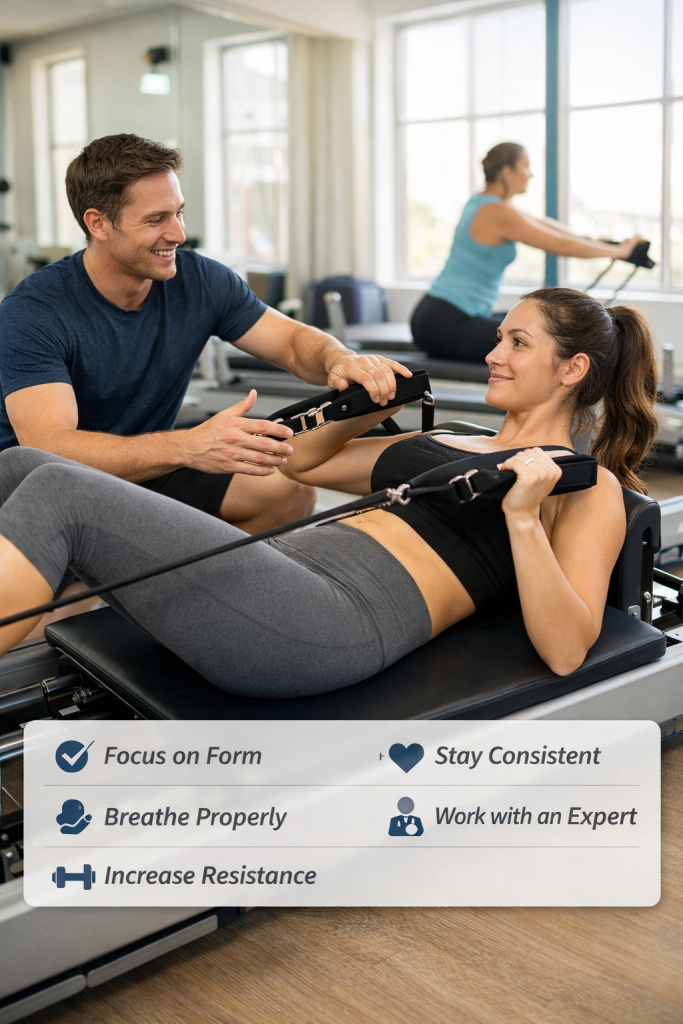
6 Tips to Maximize Your Pilates Reformer Results
- Focus on form over repetitions. Quality beats quantity. Performing each movement with good alignment engages the right muscles and lowers the risk of strain.
- Coordinate your breathing. Exhale on the effort and inhale on the return. Controlled breathing helps you stabilise your trunk and keep a steady rhythm.
- Progress resistance gradually. Start with the spring settings your instructor recommends and change them only as your strength and control improve.
- Train consistently. Two to three sessions per week is a practical rhythm for most people and gives your body time to adapt between classes.
- Balance your routine. Pair Reformer sessions with low-impact cardio, walking or a yoga class for mobility and recovery.
- Learn from qualified instructors. Hands-on cues and tailored modifications from experienced Studio Fitology instructors help you progress safely.
Who Should Practice Pilates Reformer?
Reformer training can be adapted for most people, including:
- Beginners starting a structured fitness routine
- Athletes looking to improve control, mobility and balance
- Office workers who spend long hours sitting
- People returning to exercise after an injury, with clearance from their healthcare provider and guidance from an instructor
If you have a specific injury or health concern, a private Pilates session lets an instructor build the programme around your needs before you join group classes.
Pilates Reformer vs Mat Pilates
Mat Pilates mainly uses your body weight, while the Reformer adds adjustable spring resistance and support. That makes it easier to scale exercises up or down, add variety and progress over time. Many people enjoy combining both: mat work builds body awareness anywhere, and the Reformer adds load and feedback. Both are part of our Pilates classes.
Frequently Asked Questions
How often should I do Pilates Reformer to see results?
Most people notice improvements in strength, posture and control by practising two to three times per week. Consistency and good technique matter more than intensity.
Is a Pilates Reformer workout good for beginners?
Yes. Spring resistance can be lightened and exercises modified, so beginners can learn the fundamentals safely. Look for beginner-friendly or intro-level classes on the class schedule.
Should I do Reformer Pilates alongside other workouts?
Yes — Reformer training complements cardio, strength training and yoga. Many clients use it to improve core control and posture for their other activities.
Start Your Pilates Reformer Practice
A Pilates Reformer workout is a low-impact way to build strength, flexibility, posture and body awareness. With consistent practice and expert instruction, the results last. Explore our class packages or register for your first class at Studio Fitology in North York, Toronto.
Discover More Mindful Moments